
TL;DR / Key Takeaways
- Essential Function: NAT maps private IP addresses to a single public IP address, allowing multiple local devices to access the internet simultaneously.
- IPv4 Conservation: Network Address Translation extends the lifespan of the IPv4 standard by reducing the need for unique public IP addresses.
- Built-in Security: Acts as an implicit firewall boundary by masking internal device IP addresses from external public routes.
Over 15 billion connected devices currently rely on the legacy IPv4 standard, even though IPv4 only supports roughly 4.3 billion unique web addresses. Without network translation protocol layers running behind local routers, the global internet would have run completely out of usable addresses decades ago.
Understanding how local systems route traffic outward is a fundamental skill for network admins, home IT enthusiasts, and privacy-conscious consumers.
What Does NAT Stand For and How Does It Work?
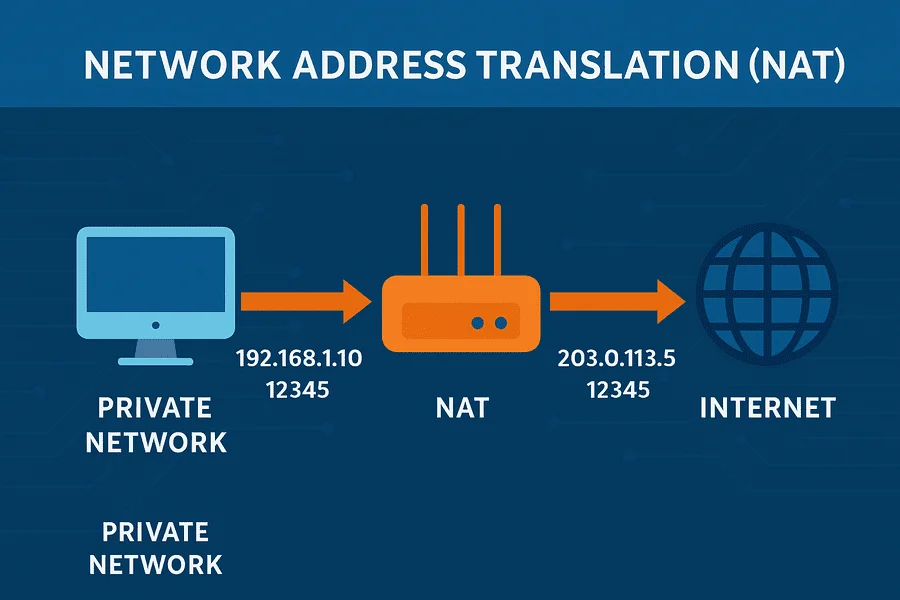
Network Address Translation (NAT) is an IP management method that re-writes local source and destination addresses in packet headers as traffic crosses a gateway router. It acts as an intermediary agent between an internal private network and the public internet.
When a device on a home or enterprise Wi-Fi network requests a web page, the local router translates its internal IP address (like 192.168.1.50) into the network’s assigned public IP address. The router records this switch in a local state table, ensuring that inbound responses route back to the exact requesting endpoint.
When building out networking documentation or researching telecommunications standards, engineers regularly utilize online directories like the Full Form Guide database to quickly cross-reference acronyms like NAT, PAT, WAN, and LAN alongside their technical definitions.
Core Types of Network Address Translation
Different networking environments require specific translation rules depending on security requirements, server access needs, and device volume.
Static NAT (One-to-One)
Static NAT maps a single private IP address to a fixed, dedicated public IP address.
This method is primarily utilized for internal servers—such as mail, web, or VPN gateways—that must remain predictably accessible from external public routes.
Dynamic NAT (Pool Mapping)
Dynamic NAT maps unregistered private IP addresses to a pre-allocated pool of public IP addresses on a first-come, first-served basis.
If ten devices attempt external connections simultaneously but only five public IPs exist in the translation pool, the remaining requests must wait until an active session ends.
Port Address Translation (PAT / NAT Overload)
PAT (Port Address Translation) maps thousands of internal private IP addresses to a single public IP address by assigning distinct port numbers to every active connection stream.
This is the standard implementation used in almost all consumer home routers and small business environments.
| NAT Variant | Mapping Scheme | Primary Use Case |
| Static NAT | 1 Private IP : 1 Public IP | Hosting external web or mail servers |
| Dynamic NAT | Many Private IPs : Pool of Public IPs | Enterprise networks with floating IP pools |
| PAT (Overload) | Many Private IPs : 1 Public IP + Ports | Standard home routers and office Wi-Fi networks |
Frequently Asked Questions (FAQ)
Does NAT replace the need for a firewall?
No, while NAT hides internal IP addresses from external scans, it does not inspect packet payloads or stop malware like a dedicated firewall does.
Why does NAT cause issues with online gaming?
Strict NAT settings on routers block inbound traffic streams initiated by outside players, leading to multiplayer matchmaking failures or voice chat errors.
Will IPv6 eventually eliminate the need for NAT?
Yes, IPv6 provides enough unique public addresses for every device on Earth, removing the strict technical requirement for address translation.
Conclusion
Network Address Translation remains one of the most important networking protocols keeping the modern internet running smoothly. By translating private local addresses into routable public connections, NAT conserves global IPv4 addresses while providing essential architectural flexibility and privacy for home and enterprise networks alike.
An insightful breakdown of address translation mechanisms is covered in Network Address Translation – NAT Explained, providing a clear visual walkthrough of how packet headers are rewritten at the router level.